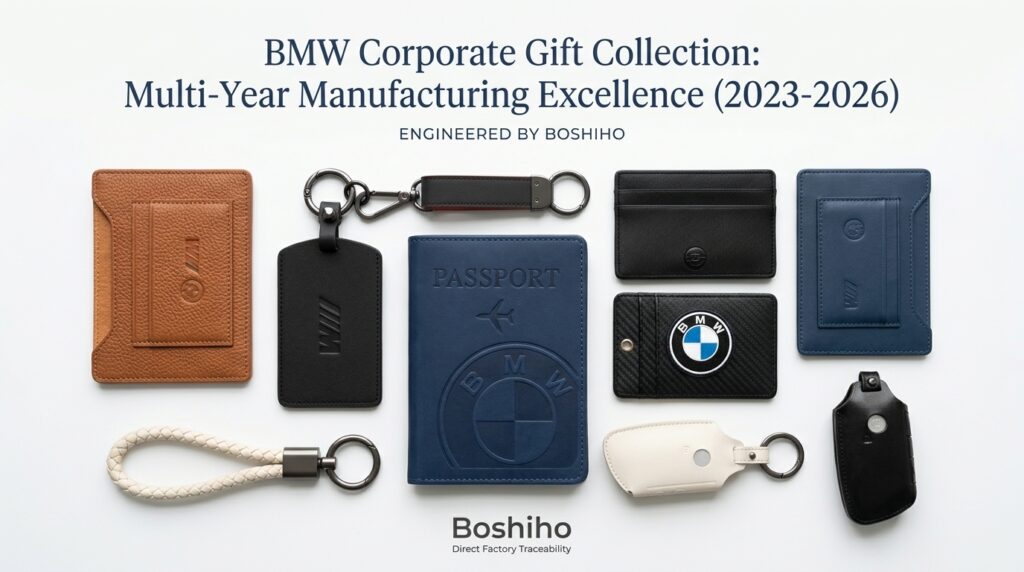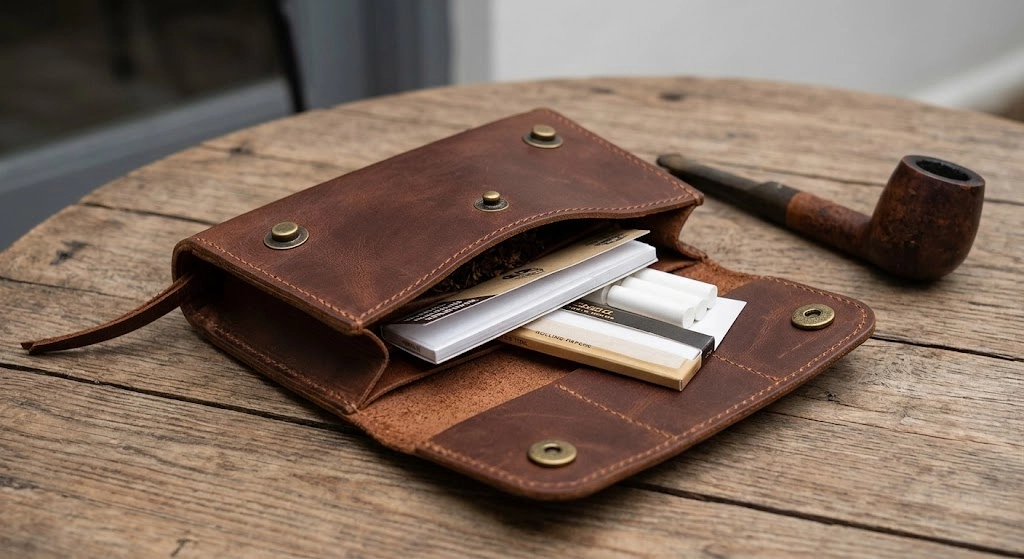
Choosing the right logo process for custom leather goods depends on the material surface, brand style, order plan, wear conditions and acceptable tooling. Debossing offers a restrained premium look; foil stamping adds visible color and contrast; laser engraving creates precise, tool-free marks on compatible surfaces; and metal logos deliver the strongest three-dimensional brand presence. No single method is universally best. A buyer should approve the logo on the production material—not only on a screen—and confirm placement, size, color, attachment, testing and replacement standards before bulk production.
How should a buyer choose a logo method for custom leather goods?
Start with the product’s real use rather than the logo artwork alone. A logo on a corporate card holder faces frequent hand contact and pocket abrasion. A mark on a luggage tag may encounter rubbing, moisture and temperature changes. A logo on a presentation box may experience less wear but must look consistent across a large batch. These conditions affect whether a recessed mark, foil layer, laser-burned surface or attached metal component is the more practical option.
A useful sourcing brief should identify five things before quotation: the exact product and material, logo vector file, target dimensions, placement, and expected order quantity. Buyers should also state whether color matching, metal plating, retail packaging, barcode labeling or market-specific testing is required. This prevents a supplier from comparing unlike options or quoting a logo method that looks attractive in a rendering but is unsuitable for the final surface.
For BOSHIHO projects, the appropriate process should be reviewed against the submitted artwork and selected material. MOQ, tooling, sampling time and testing should be confirmed per project because they can change with logo size, material structure, number of colors, hardware design and order configuration.
What is debossing, and when does it work best?
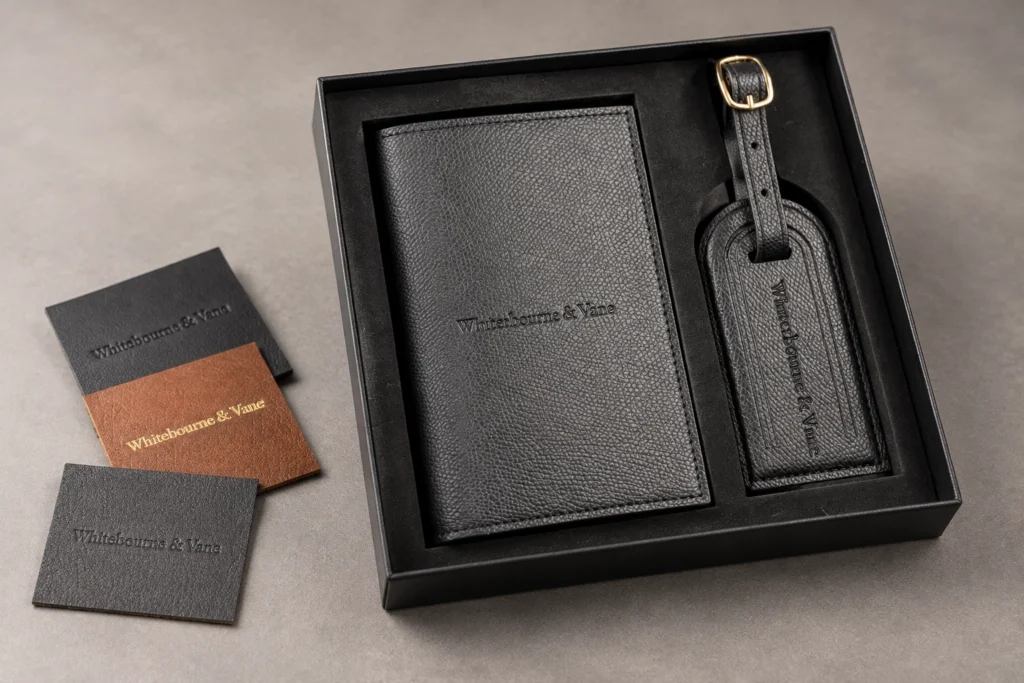
Debossing presses a die into the surface to create a recessed logo. It is often chosen for wallets, card holders, passport covers, luggage tags, notebooks and corporate gifts where the buyer wants branding that feels integrated with the product rather than printed on top. The result can look discreet and professional, particularly on smooth or lightly textured surfaces that accept a clean impression.
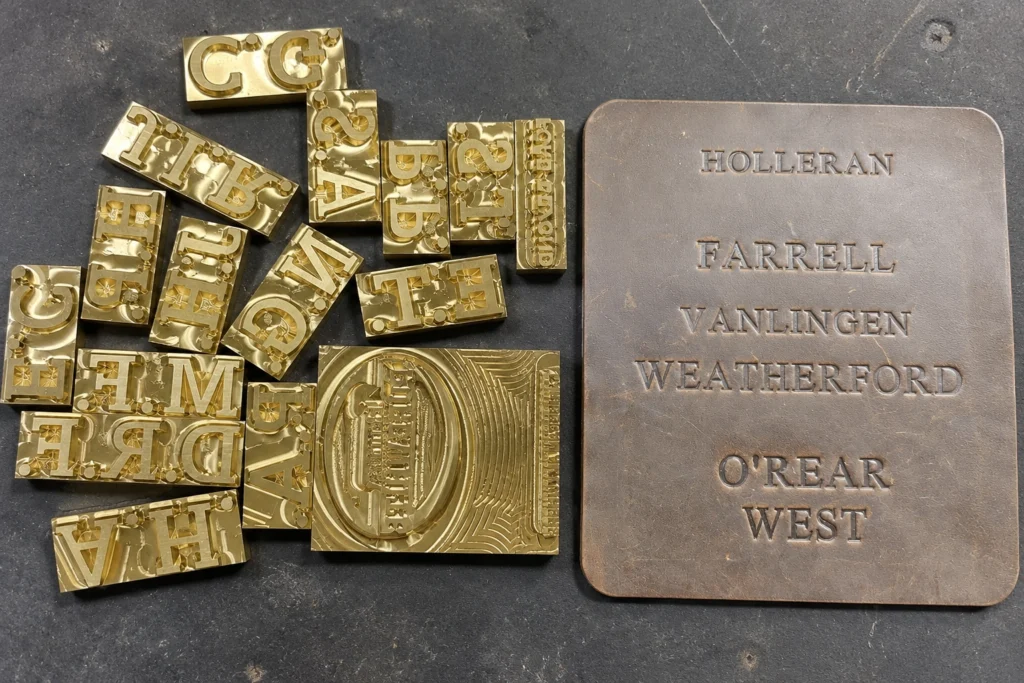
The outcome depends on more than pressure. Material thickness, finish, softness, grain, backing and internal reinforcement influence edge definition and depth. A very soft surface may recover after pressing, while a strong grain can reduce the visibility of fine lettering. Small counters inside letters and very thin lines may also close up. Buyers should therefore supply vector artwork and allow the manufacturer to recommend a workable minimum line weight for the selected material.
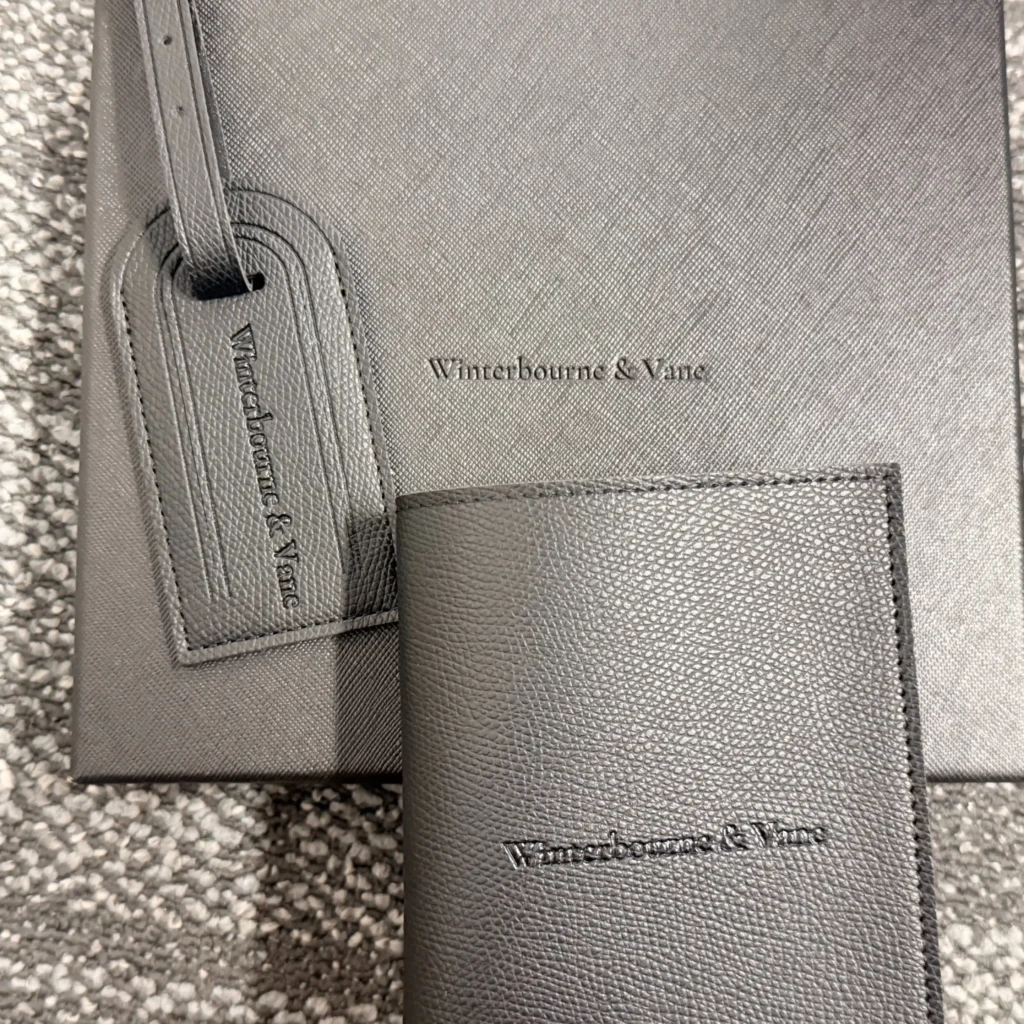
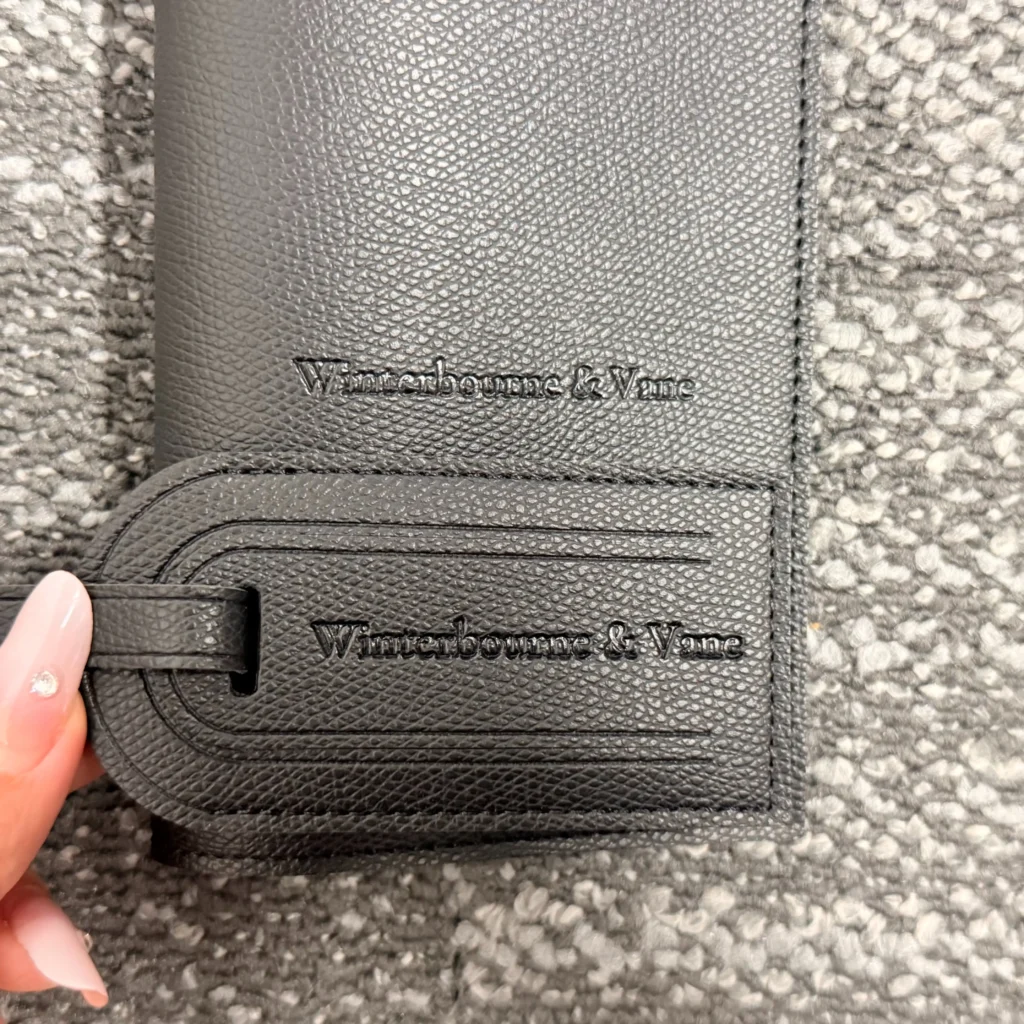
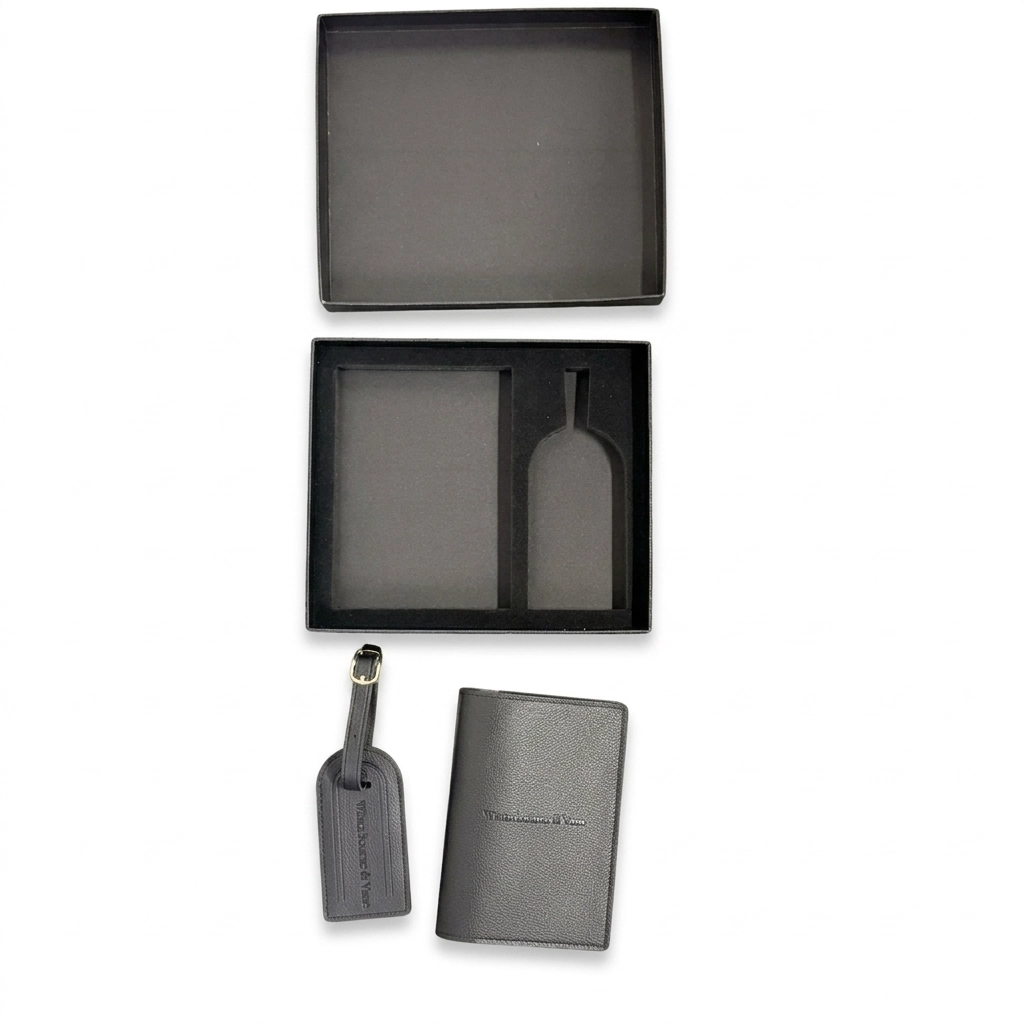
Debossing is not automatically permanent or identical on every leather. Natural grain and surface variation can change the appearance from piece to piece. The correct approval method is a physical sample on the intended material and color. The approved sample should define acceptable position, depth, clarity and natural variation for bulk inspection.
Choose debossing when:
- The desired effect is understated, tactile and tonal.
- The material can hold a clear recessed impression.
- The brand accepts natural variation on genuine leather.
- The design is relatively simple and readable at the intended size.
- A permanent die is acceptable for the order plan.
When should buyers use foil stamping on leather goods?
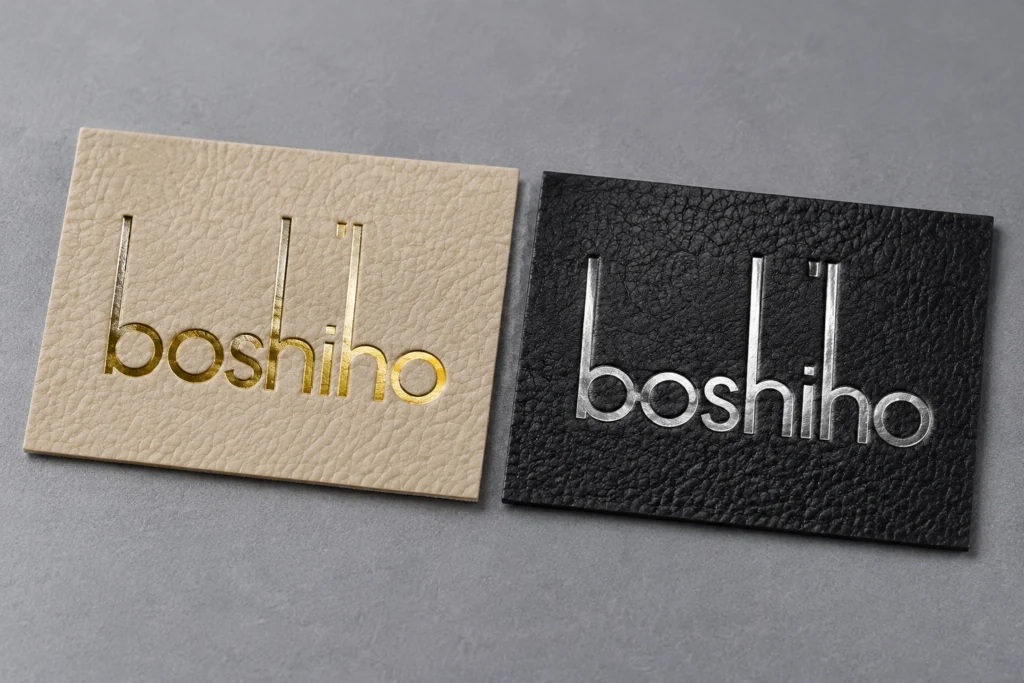
Foil stamping combines pressure and heat to transfer a colored or metallic foil onto the surface. Gold, silver and other metallic effects can create strong shelf appeal for corporate gifts, fashion accessories and premium presentation items. It is useful when the logo must remain readable against a dark material or when the brand identity specifically requires a metallic accent.
Compatibility is the main sourcing question. The foil must bond to the selected surface coating, and the heat and pressure must not damage the material. Texture, finish, oil or wax content, curvature and repeated flexing can influence transfer quality. A result approved on one leather cannot safely be assumed to perform the same way on another color or finish.
Buyers should request a sample that shows full logo coverage, edge cleanliness, color appearance and adhesion after appropriate handling. If the product will be rubbed or flexed regularly, define a realistic evaluation method with the supplier. Avoid accepting vague claims such as “never fades” unless a named test method, sample construction and acceptance criterion are provided.
Choose foil stamping when:
- Metallic or colored contrast is part of the brand brief.
- The product is intended for gifting or premium presentation.
- The surface has been tested for foil transfer and adhesion.
- The artwork has enough area for clean, continuous coverage.
- The expected wear environment is compatible with the finish.
Is laser engraving suitable for every leather or leather alternative?
No. Laser engraving uses focused energy to alter the surface, creating a permanent-looking tonal mark without transferring foil or ink. It can reproduce detailed artwork and may avoid a dedicated logo die, which makes it attractive for personalization, prototypes and designs that change frequently. It is commonly considered for selected leathers, coated materials, microfiber, cork and certain components, but suitability must be tested rather than assumed.
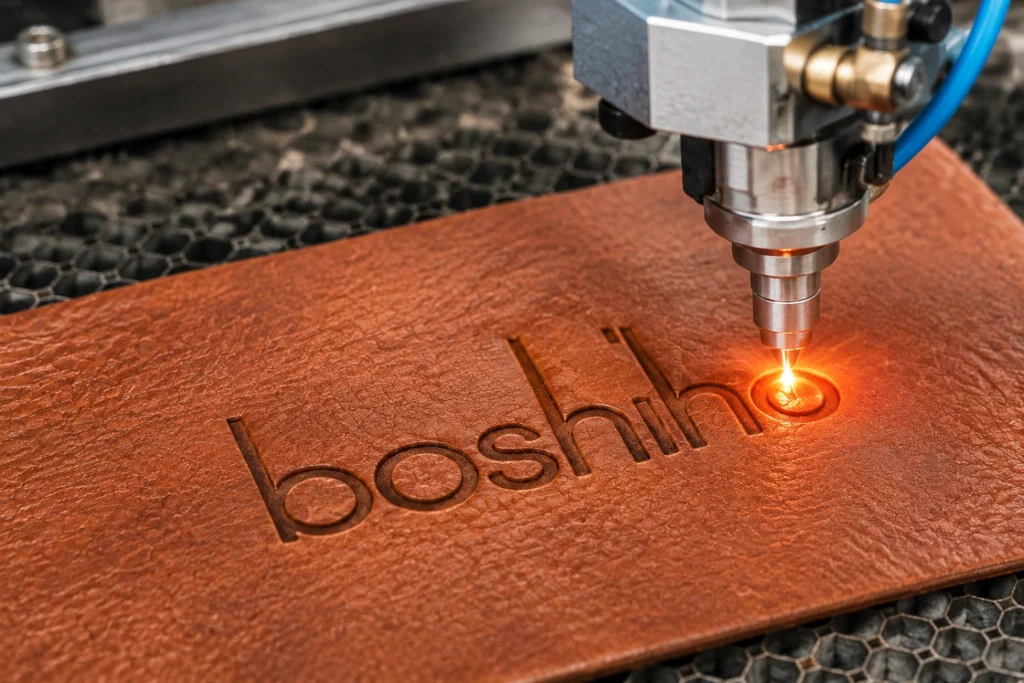
The laser reaction varies by material composition, coating, color and thickness. The mark may become darker, lighter or uneven; heat can also change texture or create residue and odor. On some coated synthetics, engraving may expose a different-colored layer or produce an unacceptable edge. Material safety information and process controls are therefore important before production, especially when the substrate composition is not fully documented.
A buyer should approve contrast, edge quality, depth, odor, residue and any change to surface feel. For serialized names or individual personalization, the data workflow also needs control: spelling, character set, file naming, placement and replacement responsibility must be agreed before production.
Choose laser engraving when:
- Fine detail, variable names or serial information is required.
- The exact material produces a clean and acceptable test result.
- A tonal rather than metallic logo suits the brand.
- The project benefits from avoiding a fixed die for each design.
- The supplier can control artwork data and placement consistently.
When is a custom metal logo the better branding option?
A metal logo or metal badge creates the most dimensional and immediately visible effect of the four methods. It may be appropriate for premium bags, wallets, travel accessories and gift programs where hardware is an intentional part of the product design. The buyer can potentially specify shape, plating color, surface finish and attachment style, subject to manufacturing feasibility.
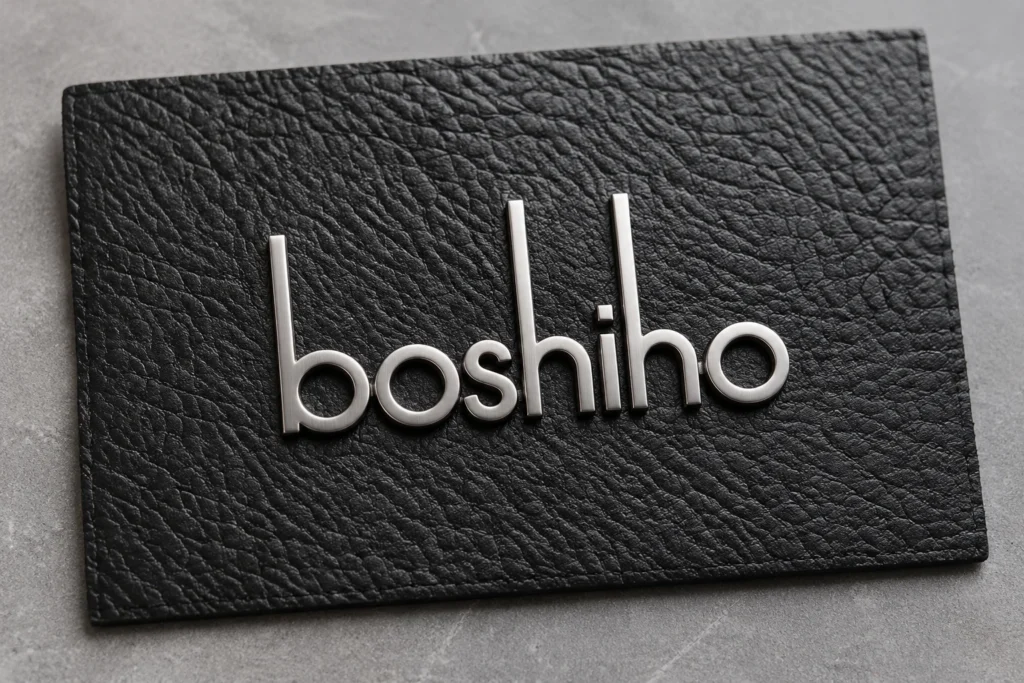
However, the decision involves more than appearance. A metal component adds tooling, component sourcing, assembly and inspection requirements. Its weight and edges must suit the product. Attachment points must not damage cards, linings or contents, and the rear construction should be considered during pattern development—not added after the product is finished. Plating consistency and legal or customer requirements for restricted substances may also need documentation.
The approval sample should confirm dimensions, plating color, edge finish, attachment security, rotation, alignment and contact with nearby materials. Packaging may require protection so hardware does not scratch another product in transit. Replacement rules should also be defined in case the final inspection finds plating defects or loose attachment.
Choose a metal logo when:
- A prominent three-dimensional brand signature is required.
- The product construction can support the component and attachment.
- Tooling and component lead time fit the launch schedule.
- Plating, finish and compliance documentation can be confirmed.
- The order plan justifies a custom hardware component.
How do the four leather logo methods compare?
| Decision factor | Debossing | Foil stamping | Laser engraving | Metal logo |
|---|---|---|---|---|
| Visual effect | Recessed, tonal, subtle | Colored or metallic contrast | Tonal, precise, technical | Dimensional, prominent, premium |
| Typical setup | Custom die | Die plus selected foil | Digital artwork and machine settings | Custom component/tooling and attachment |
| Material dependency | Grain, softness, finish and backing | Surface coating, heat and adhesion | Composition, coating, color and laser reaction | Product structure, hardware material and plating |
| Fine detail | Moderate; very thin lines may close | Moderate; small areas may transfer unevenly | Potentially high on compatible material | Depends on manufacturing and component size |
| Variable personalization | Usually inefficient | Usually inefficient | Well suited when data is controlled | Normally not suited to unit-level variation |
| Main wear concern | Impression definition and surface recovery | Foil adhesion, rubbing and flexing | Surface change, residue and contrast | Attachment, scratching and plating consistency |
| Best fit | Quiet luxury, wallets, card holders | Gifts, presentation items, visible branding | Personalization and precise tonal marks | Premium bags, travel goods and statement hardware |
| Buyer must approve | Depth, clarity, position and variation | Color, coverage, edges and adhesion | Contrast, edge, odor/residue and placement | Size, plating, edges, attachment and alignment |
This table is a decision aid, not a production specification. The same method can behave differently across genuine leather, PU, microfiber, cork and coated textiles. A physical sample remains the most reliable basis for approval.
What files and specifications should a procurement team provide?
A complete logo brief reduces quotation changes and sample delays. Provide the logo as editable vector artwork whenever possible, with outlined fonts and a reference showing the correct proportions. Identify the product, material, color, logo dimensions, placement and orientation. If the logo must follow a brand color, provide the relevant color reference and explain whether an exact match is mandatory or whether the nearest available foil or plating is acceptable.
The RFQ should also state the estimated quantity by style and color, target market, packaging format, desired launch date and any required testing or compliance documentation. For a metal badge, include preferred finish and attachment concept. For personalization, provide a sample data file and rules for capitalization, non-Latin characters and duplicate names.
A practical logo approval sheet should record:
- Product and material code.
- Logo process and artwork version.
- Finished logo dimensions and tolerance agreed with the supplier.
- Placement reference from fixed product edges.
- Color, foil or plating reference.
- Approved sample photos and physical sample status.
- Inspection criteria and handling test agreed for the project.
- Packaging protection around the branded area.
What quality checks should be agreed before bulk production?
Quality control should convert subjective branding language into observable acceptance criteria. “Premium,” “deep,” “shiny” and “durable” are not inspection standards by themselves. The purchase specification should show what an acceptable logo looks like, how position is measured, which defects are critical, and how many pieces will be inspected under the buyer’s agreed sampling plan.
For debossing, inspect position, clarity, depth consistency and damage around the impression. For foil, inspect coverage, pinholes, edge bleed, color and adhesion after the agreed handling test. For laser engraving, inspect contrast, edge definition, placement, residue and surface distortion. For a metal logo, inspect plating, scratches, burrs, alignment, attachment security and protection from internal contact.
Where laboratory testing is required, select methods that match the material and risk. For example, ISO publishes leather color-fastness methods such as ISO 11640 for rubbing behavior, but that does not automatically certify a particular logo finish or whole product. The buyer and supplier must define the correct method, specimen, condition and pass criteria. Do not convert an unrelated material test into an unsupported durability claim.
How can buyers control color and logo consistency across repeat orders?
Repeat-order consistency starts with retained references. Keep the approved physical sample, artwork revision, material code, foil or plating reference, die identification and production notes. Screen images alone are insufficient because monitor settings and lighting change perceived color. If a product uses natural leather, the agreement should also describe acceptable grain and shade variation rather than promising impossible uniformity.
For every repeat order, verify that the same material and finish are available and confirm whether any component supplier or process has changed. A new color, coating or tannery lot may require a fresh logo trial even when the artwork is unchanged. For metal logos, plating lots and protective packaging should be checked again. For foil, the exact foil reference and bonding behavior should be reconfirmed.
BOSHIHO buyers can include these control items in the RFQ and sample approval process. Final feasibility, commercial terms and production controls should be confirmed against the actual product specification rather than copied from a previous project.
What should a brand send to BOSHIHO for a logo feasibility review?
Send the product type or reference image, editable logo artwork, target logo size and location, preferred material and color, estimated quantity, destination market, packaging needs and target timeline. If you already know the desired process, state it; if not, explain the visual effect and wear conditions you expect. This allows BOSHIHO to review debossing, foil stamping, laser engraving or metal-logo options against the project instead of recommending a method in isolation.
A feasibility review is not a substitute for a physical sample. The next step should be to approve the artwork layout, material and logo trial before bulk production. For projects with multiple colors or materials, approve each relevant combination rather than assuming one sample covers all variants.
For faster review, label each artwork file with the product, color and version, and show the proposed logo location on a dimensioned drawing or marked product image. State which requirements are mandatory and which are open to supplier recommendation. If the project has a launch deadline, include the required delivery date rather than only the desired sample date, so tooling, approval, production and transport can be planned together.
CTA: Send your product brief, vector logo, material preference, quantity and target market to BOSHIHO for a project-specific logo feasibility review.
Frequently Asked Questions
Which logo method looks most premium on leather goods?
“Premium” depends on brand identity and product design. Debossing creates a restrained luxury effect, foil adds visible metallic contrast, laser produces a precise tonal mark, and metal hardware creates the strongest dimensional presence. The best choice is the one that remains coherent with the material, construction, use and packaging.
Is debossing more durable than foil stamping?
Debossing does not rely on a transferred foil layer, but durability still depends on the material, finish, impression and wear. Foil performance depends strongly on bonding and use conditions. Buyers should approve samples and agree on relevant handling or rubbing checks instead of relying on a universal ranking.
Can laser engraving reproduce a detailed logo?
It can reproduce fine detail on compatible materials, but the result varies by coating, composition, color and laser settings. Very small artwork still requires a legibility test. Always approve a physical trial on the exact production material.
Can one logo sample be used to approve every color and material?
Usually not. Different colors, finishes and substrates can change debossing definition, foil adhesion and laser contrast. Approve each materially different combination that will enter production.
Does a custom metal logo require special product construction?
Often yes. Attachment, backing, weight, edges and contact with the lining or contents should be considered during pattern development. The sample should verify both appearance and attachment security.
What artwork format should a buyer provide?
Editable vector artwork is preferred, with fonts converted to outlines. Include finished dimensions, placement, color references and a visual brand guideline if available. Raster images alone may not provide enough detail for accurate tooling or engraving.
What is the MOQ for each logo process?
There is no responsible universal answer. MOQ can depend on product style, material order, color breakdown, die or hardware tooling, foil or plating requirements, personalization and packaging. BOSHIHO should confirm it after reviewing the complete project brief.
How should logo durability be specified?
Define the real use condition, the test or handling procedure, sample construction and pass criteria. Avoid vague promises such as “permanent” or “never fades.” If third-party testing is required, confirm the applicable standard and specimen with the laboratory and supplier.