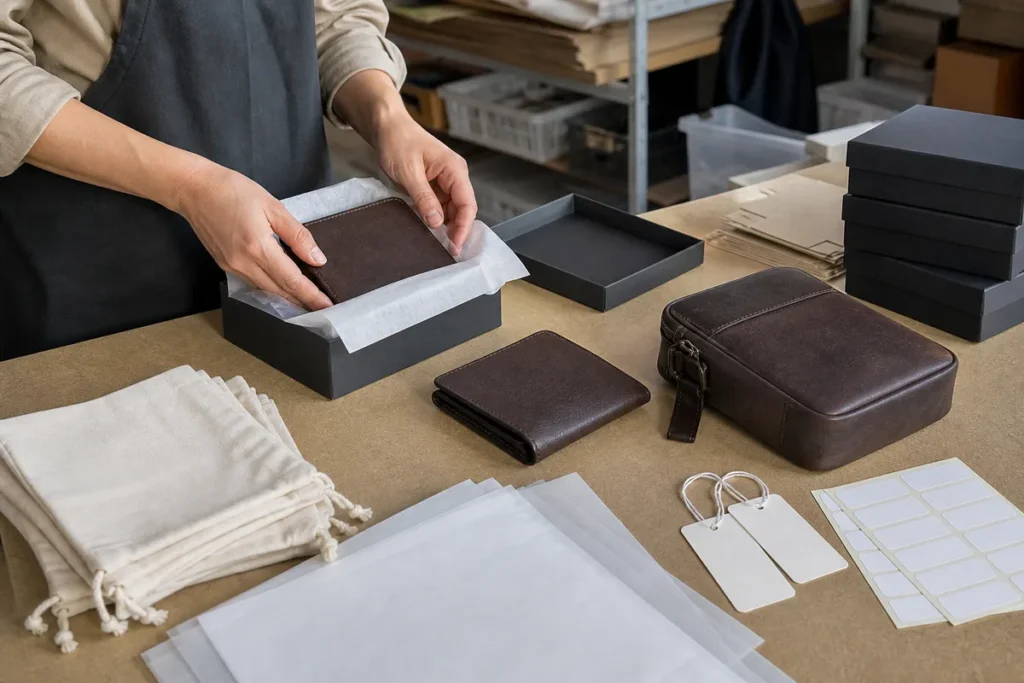
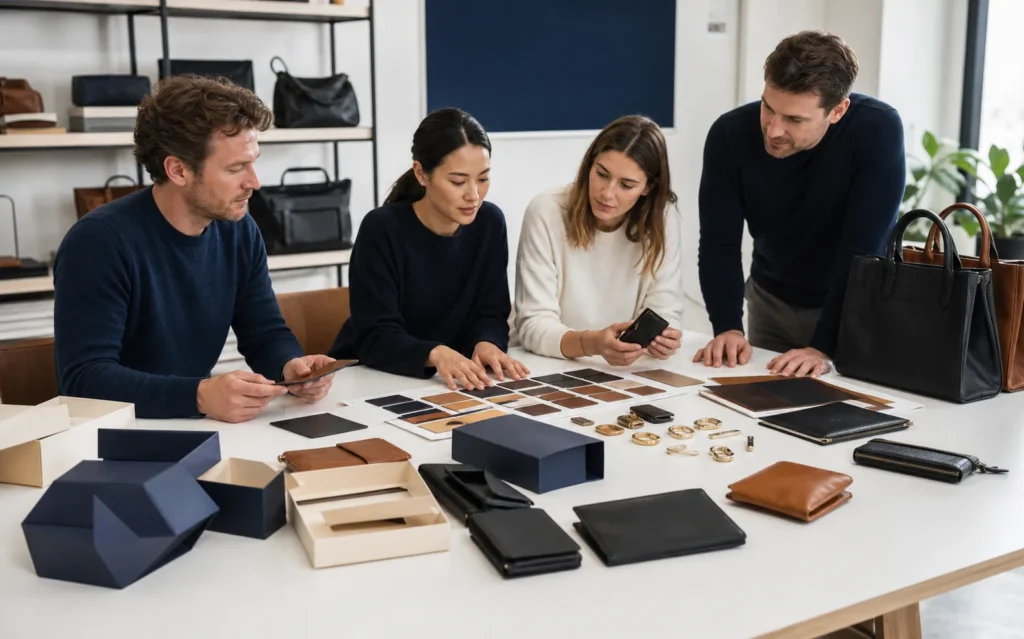
A custom sample should test a clear product direction, not guess at one. The more useful information a buyer shares at the beginning, the easier it is to coordinate material, construction, branding and packaging around the same goal.
1. Show the intended product direction
A physical reference, sketch, technical drawing or group of photographs can all be useful. The reference does not need to be a finished design, but it should show the proportions, functions or visual details that matter most.
It is equally helpful to mark what should not be copied. A buyer may like the shape of one reference, the internal layout of another and a completely different material direction.
2. Define the commercial context
Product decisions become clearer when the team understands where and how the item will be sold. Include the target market, sales channel, expected quantity and product position where available.
- Retail, promotional, distributor or e-commerce sales channel
- Preferred material and color direction
- Required logo process, hardware or packaging
- Key dimensions, internal features and closure method
- Approval criteria for moving from sample to production
3. Review the sample as one connected system
Material, structure, logo scale and packaging should not be reviewed in isolation when they affect one another. A thicker material can change an edge profile; a metal logo can require reinforcement; a gift box can change the packed dimensions.
BOSHIHO coordinates these decisions through one development brief, then follows the confirmed direction through sampling and documented production checks.