
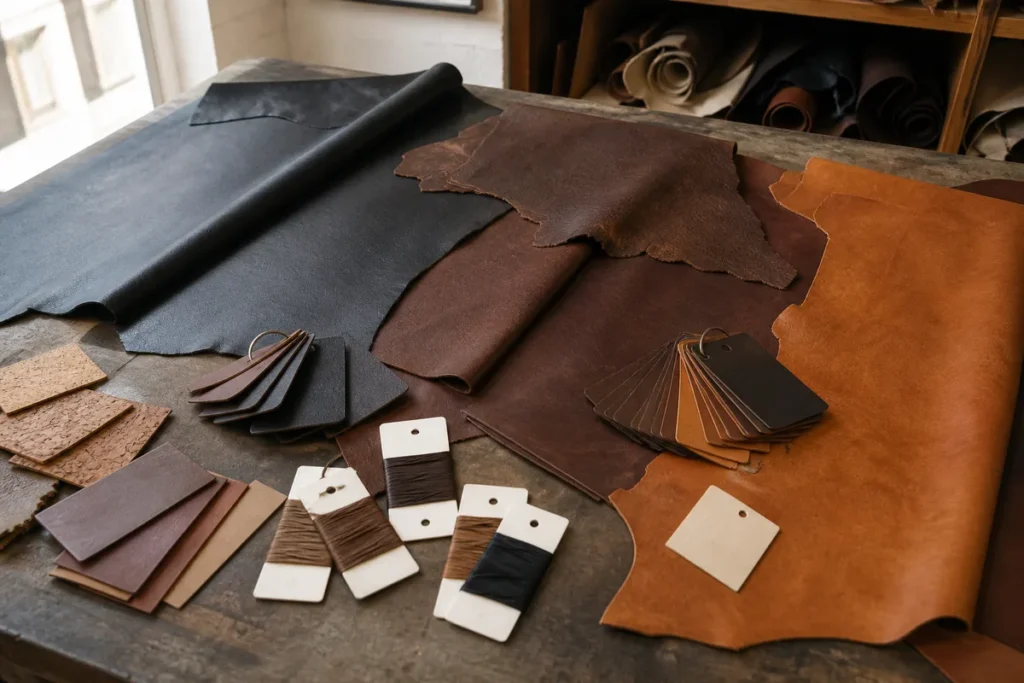
Material selection affects how a leather good looks, feels, folds, wears and fits its target price position. Genuine leather, PU leather, cork and suitable alternative materials each create a different product direction, so the decision should begin with the use case and buyer requirements.
Compare the material against the product structure
A material that works well for a soft pouch may not create the same result on a structured case. Thickness, flexibility, surface character and backing all influence how corners, seams, folds and edges can be constructed.
The team should review the material together with the intended silhouette, internal organization and areas of repeated handling.
Questions that help narrow the choice
Before selecting a final direction, buyers can compare options using a few practical questions:
- Does the product need to remain soft, hold a shape or protect its contents?
- Which surface character and color range fit the brand?
- How will edges, folds, straps or reinforced areas be finished?
- Will the material work with the selected logo and hardware process?
- What information or testing documents are relevant to the target market?
Confirm the direction on a physical sample
Material swatches are useful, but the final judgment should consider the complete sample. Construction, lining, stitching, hardware and logo treatment can all change how the material is perceived in the finished product.
BOSHIHO can review these elements together before the agreed production direction moves forward.